


 Homepage
 Forum
Forum Drivers
 HMM-Manuals
 MTM
MTM Feed
Feed

That out of the way, the intent of this post is to showcase six distinct eras of ThinkPads.
Era #1: Cut Corners
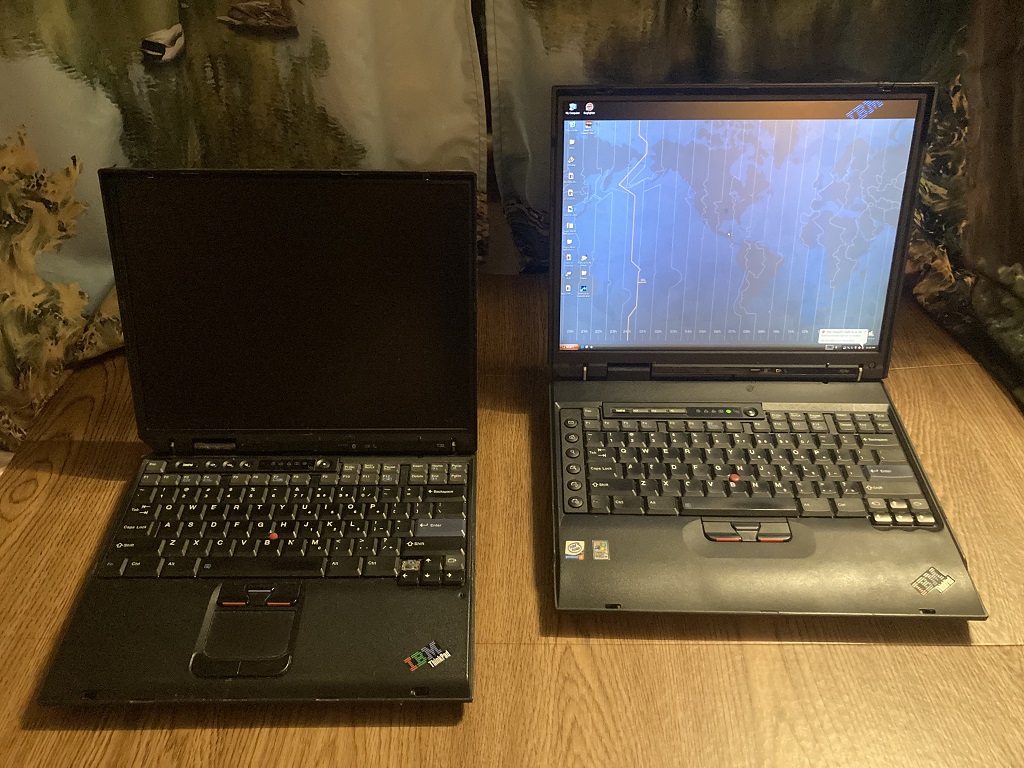
Presented here are an A31p and T30. This particular A31p was a wired-network only model, but I've retrofit it with the WLAN and Bluetooth lid of my original A31p. This wound up being pointless as I didn't transfer the Bluetooth antenna and the WLAN card has killed itself. A unique button switch on the lid bezel would toggle the Bluetooth. The T30 was given to me on this forum. Both sport their premium resolution LCDs, for the A31p the timeless UXGA FlexView and for the T30 the respectable SXGA TN. Both run Windows XP, it makes them feel young.
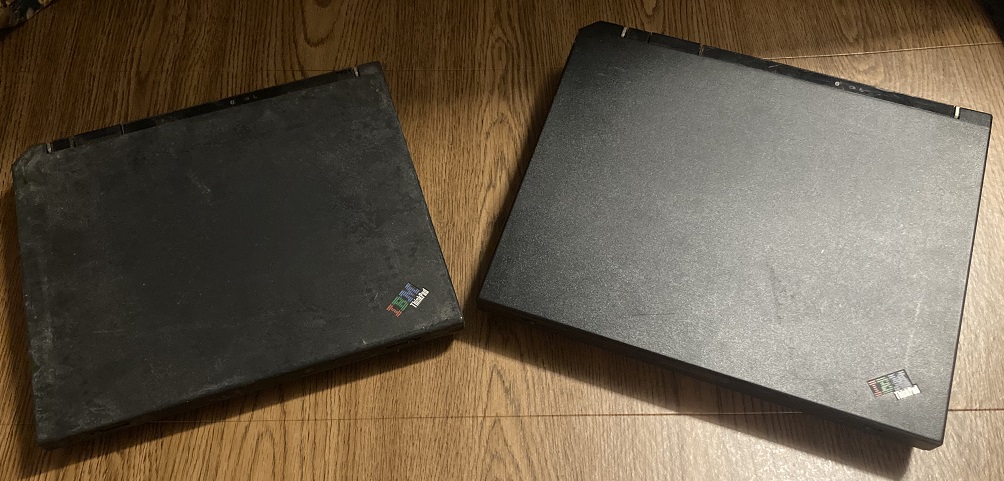
The A's plastic lid has held up better than the T's rubberized version, as is typical.
Era #2: IBM PC's Swan Song
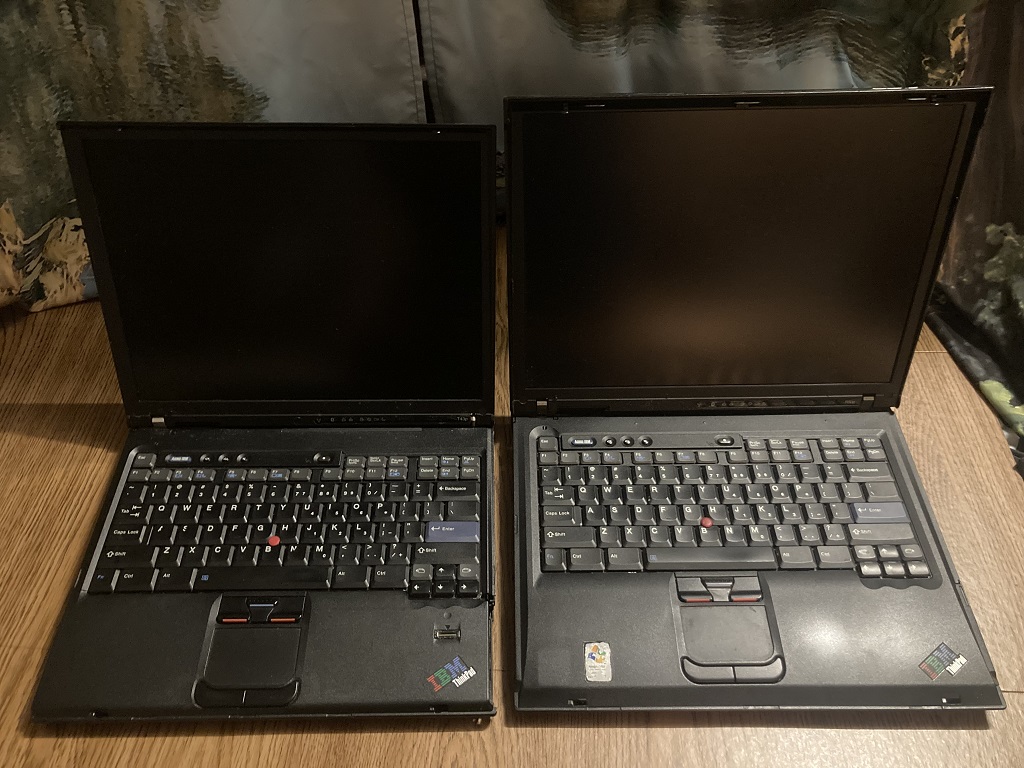
By now Ultranav is standard across the mainstream lineup. On the right is an R50p, the only -p variant of the R-series ever marketed, leveraging its 15" case to replace the A31p as the new FlexView offering, as 15" T-series did not exist yet. Alongside it is a T43p with the still-novel fingerprint reader. I get the feeling IBM was trying to save money at this time, as we know it was losing money on PCs. Cleverly, all T4* and R5* share case-compatible motherboards. Concurrently, all T4* and R5* are unreliable post-warranty disasters. This particular R suffers from the infamous Southbridge-detachment and the T has succumbed to a power delivery failure.
Era #3: The New Legends
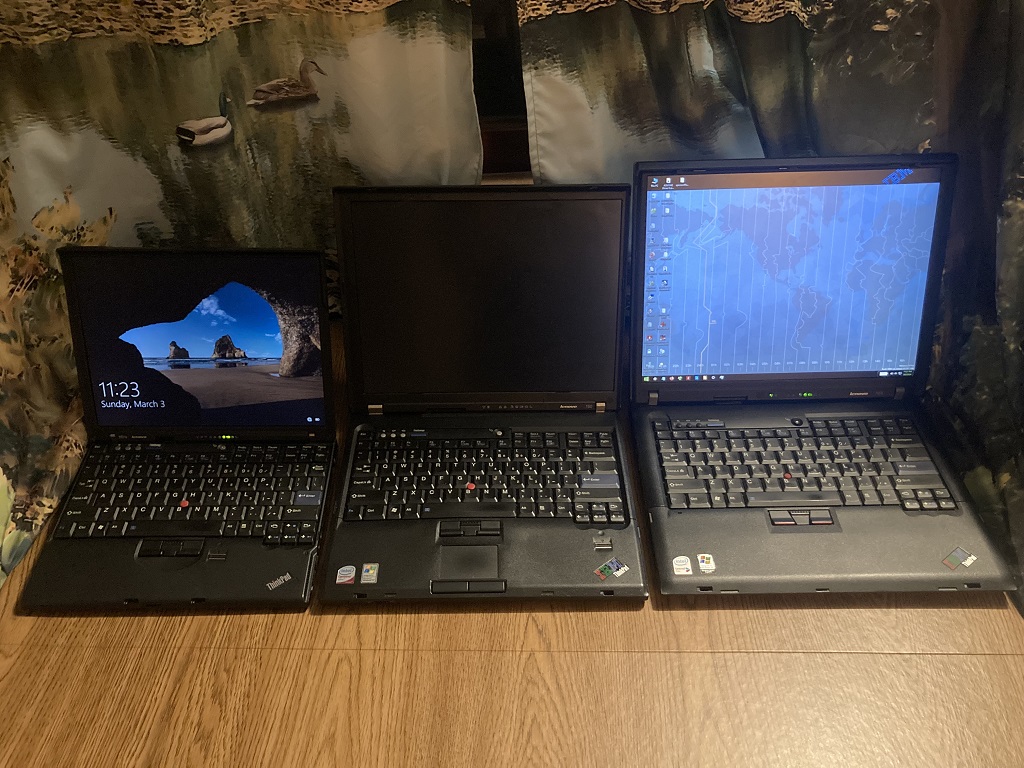
Lenovo saved the ThinkPad, with the new *60 series models enduring as fan-favorites to this day. Each model shown here is actually a FrankenPad of sorts:
- Leftmost is an X60s bottom case with an X61 Penryn board and palmrest holding up an X61s lid carrying an SXGA LCD harvested from a Tablet.
- Middle is a T60 "SchwabenPad", reconstructed from the leftovers of a T601 FrankenPad.
- Right is Lenovo's FrankenPad, the rare 15" R61i, which is nothing more than an R60 updated with the GM965 chipset. This unit has been tricked out with an EDID-equipped IDTech UXGA, a less-slow T9500, and X200 keyboard accents. Enragingly, this machine's original motherboard encountered a rare and permanent malfunction of the function hotkeys. In my aggravation I replaced it with the motherboard of a water-damaged 15.4" T61. Now the only thing setting this apart from an R60-based Frankie is the expensive R61i badge.

Era #4: The Golden (Ratio) Age
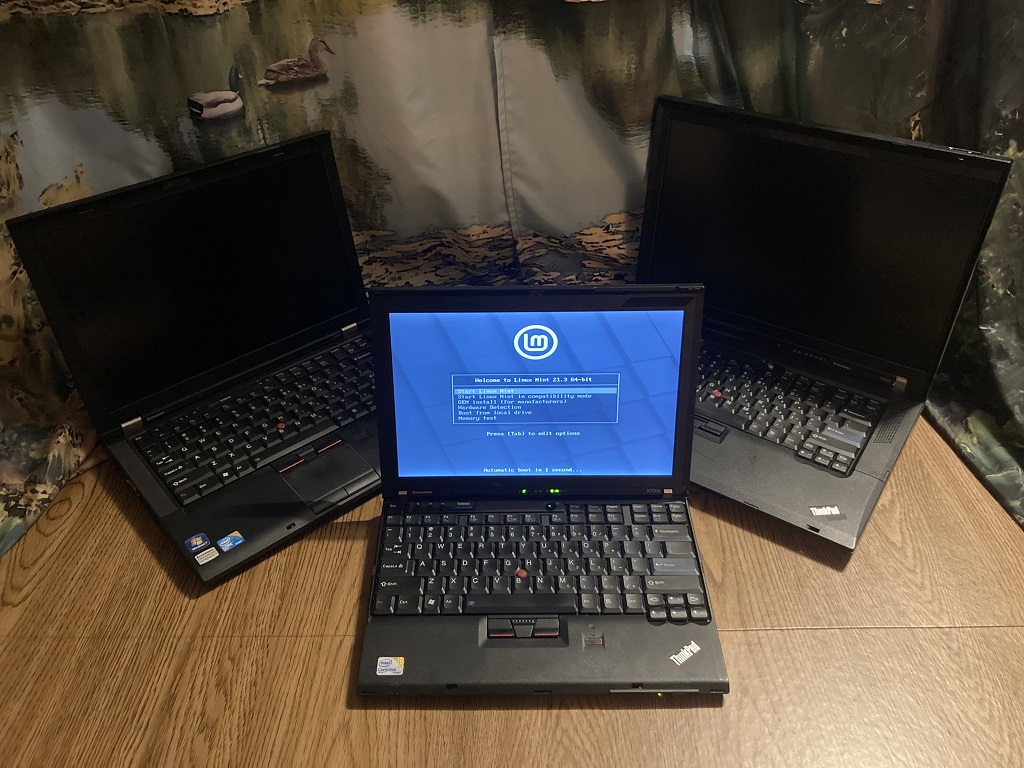
By the time of the R500, T410, and X200s pictured, widescreen was nothing new, having already infiltrated the brand in 2005 to the distaste of purists. But at the cusp of the new decade, a worse evolution lay over the horizon: 16:9. The overnight threat of television screens transformed the unfavored 16:10 aspect ratio into a luddite favorite. Amid other "radical" changes (key mutations, status LED attrition, dock downsizing, etc.), the loss of the golden ratio brought an abrupt end to the "golden age" of ThinkPads.
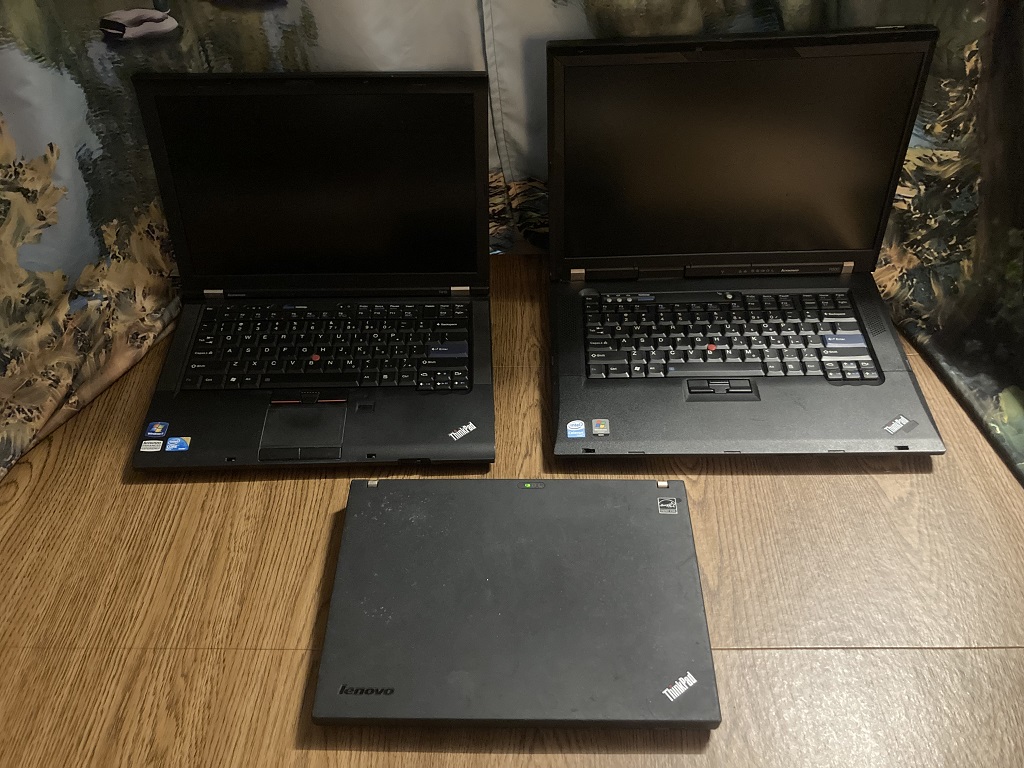
This particular R500 is wearing an R61e palmrest.
Era #5: The Last Classics
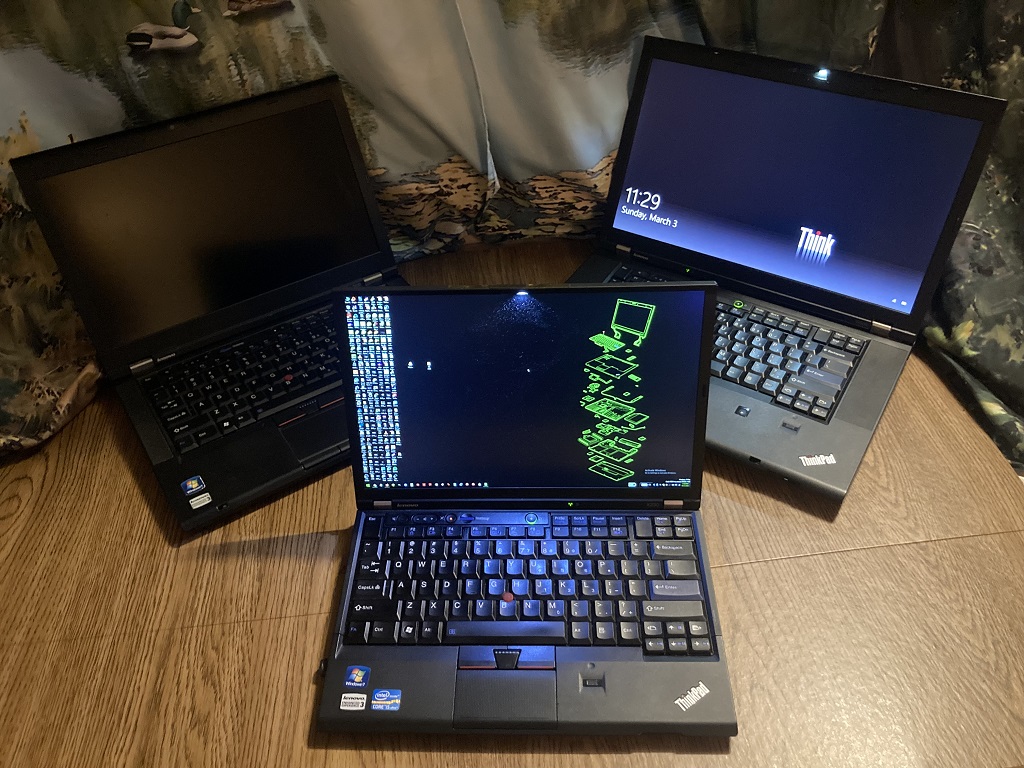
Enter the **30 generation, initially detested for their heretical chiclet keys and terrible displays. But for all that ThinkPad fans weep and despair, they are just as much begrudgingly adaptable and resourceful. Enthusiast-driven innovation has uncovered multiple game changing virtues in the rehabilitation of the Ivy Bridge ThinkPads: The physical 7-row swap, hamish's EC mod, the IPS adapters, the penultimate CPU sockets, 1vyra1n, the multigenerationally competitive performance, and anything else that is yet to come...
Pictured are a W530, T430, and X230. All three have had the 7-row swap. The T430 is IPS-modded to FHD. The X230 has been given the full "X330" treatment with a BGA quad core and WQXGA mod. The W530 had, until late last year, an IPS QHD crammed into it, until the display suddenly and catastrophically failed, so it's been restored to its original TN FHD. These machines are no slackers, even today. I am typing this on the X330, my former daily driver, which has come back out of retirement to serve as my travel laptop. She may not be the fastest, most efficient, or thinnest or lightest mobile workhorse. It is second-best only to a modified T480* in serving the combination of a powerful quad core, the classic keyboard, a large battery, a high quality high-DPI LCD, and rugged ThinkPad reliability. Sadly I don't have a T480, but I also don't think I need one...
*The 51nb laptops also exist.
Era #6: The Dark Times
I have totally skipped over the Haswell-Broadwell lineup of drab gray slabs, which failed to adequately succeed the Ivy Bridge models and offer no virtues over their successors.
Era #7: The Last Classics Redux
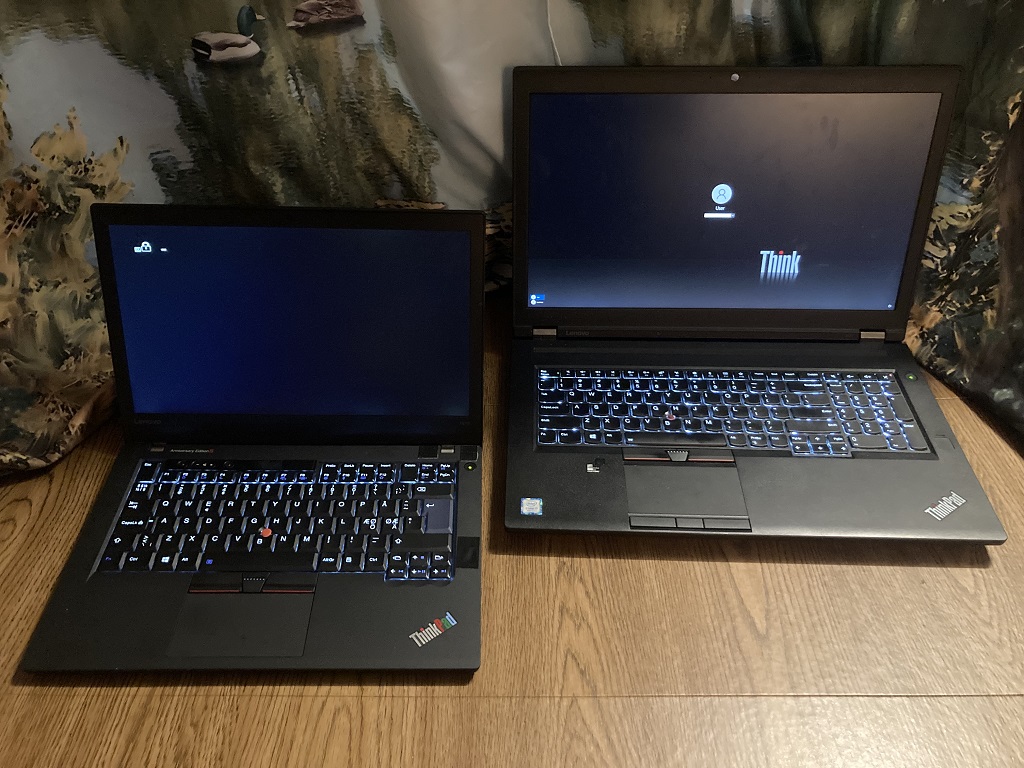
Sometimes Lenovo surprises with an about-face from questionable design changes. Here are my P71 and T470/DIY T25. The P71 is the first ThinkPad I casually dropped $1000 on in the secondhand market. It's the vanishing point of transiently resuscitated retro features (big screen, discrete volume keys, high travel keyboard, drive activity indicator, christmas tree LEDs), legacy I/O (expresscard, UltraBay, MXM, bottom dock), and modern standards (4K, NVME, Thunderbolt 3). It's my Roman Empire, my David, my Pietà.
I built the T470/DIY T25 because I didn't want to drop $500 to MSRP on the real T25, and I'm glad I didn't. It's underwhelming, slow, and uncomfortably flexible. It's a quirky and sexy unit that's already been criticized enough.
Final Random Thoughts
My favorite ThinkPads, in order:
- P71
- X330
- R61i
- A31p
- T430s (tricked out, not depicted)
- T500 (not depicted)
If I could only keep one:
- P71
Total cost:
- Don't ask
Regrets:
- None


